Launch offer — valid today only

📄 Digital book in PDF · read it on your phone or print it

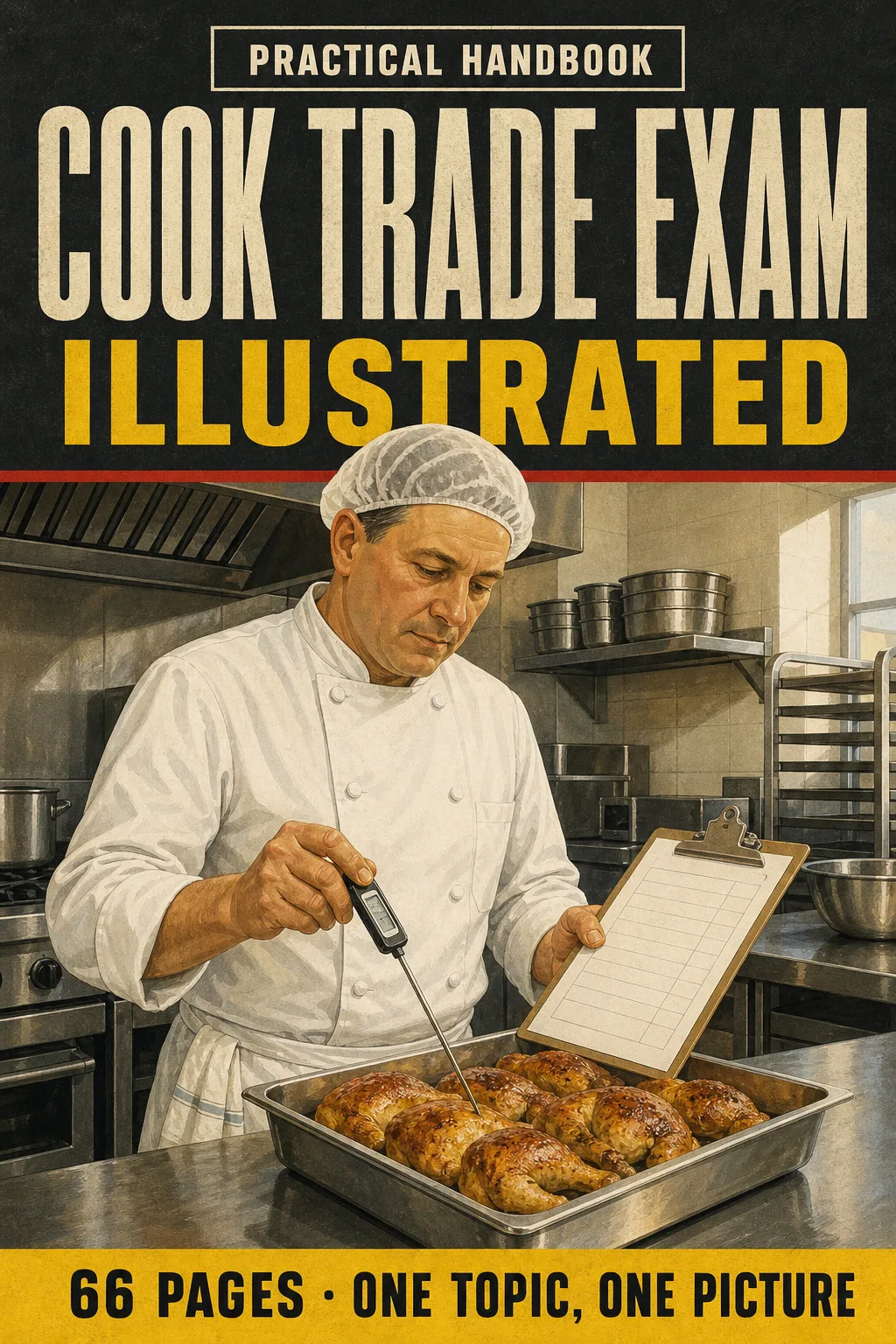
The Cook Trade Exam in Drawings Every Temperature, Cut and Sauce at a Glance

For the Red Seal Cook exam in Canada, all in °C and metric. The danger zone, cooling, WHMIS, knife cuts in millimetres, cooking methods, stocks and mother sauces, safe internal temperatures and recipe conversion. Every topic has its own page: the drawing first, then what you need to remember. 66 illustrated pages.

START STUDYING THIS WAY

🔒 Secure checkout · PDF by email · 30-day guarantee

Every topic, its own pageEach temperature, cut and method drawn, with the explanation beside it
66 illustrated pages66 illustrated pages: 9 parts, 62 topics, one per page
Up-to-date sourcesRed Seal standard for Cook, Health Canada and WHMIS 2015
PDF by emailFormat

Look Inside the Book

Every page has a big drawing and a box with the numbers and steps you need to know:

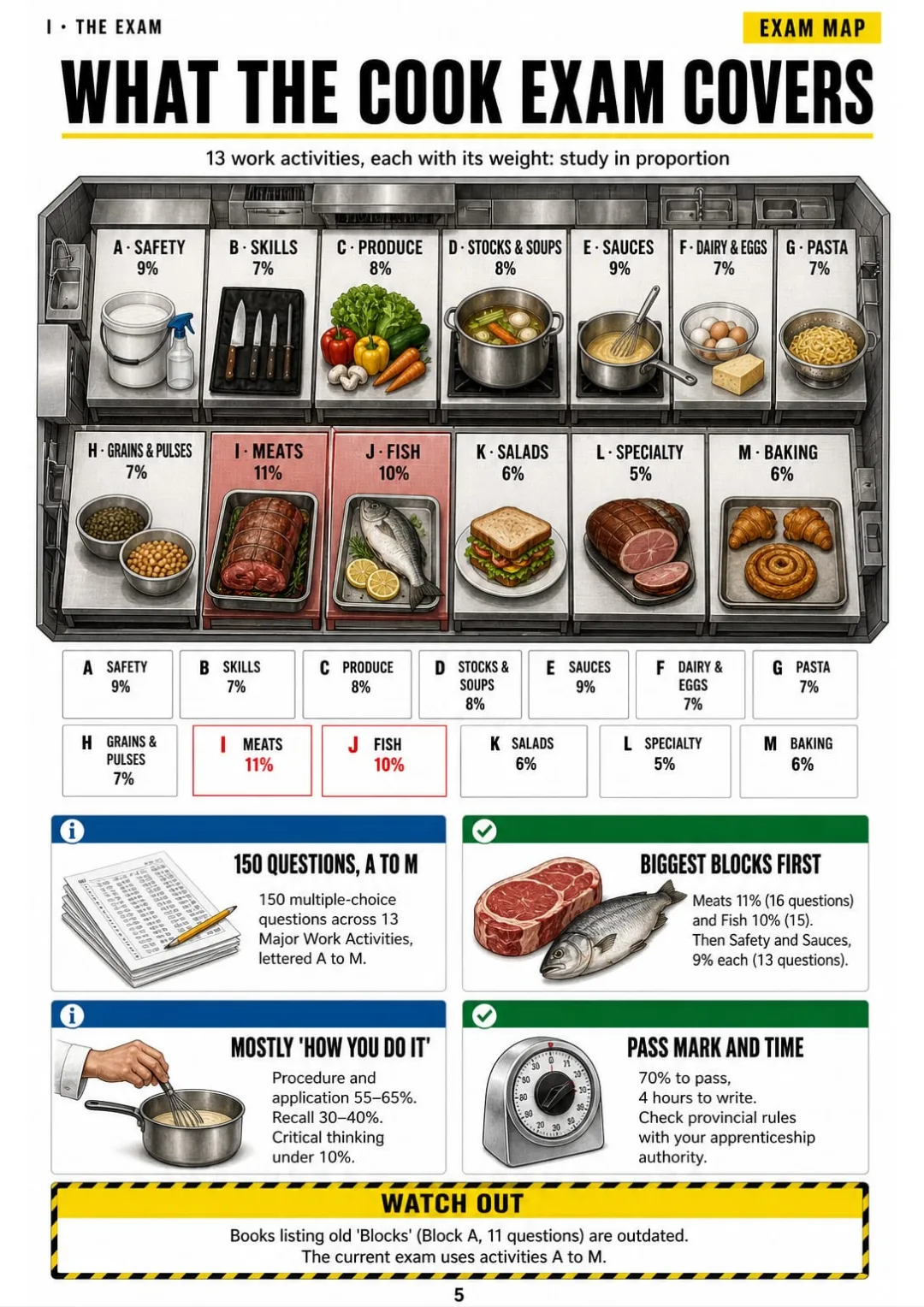
150 questions, 13 activities A–M: Meats 11%, Fish 10%, Safety and Sauces 9% each
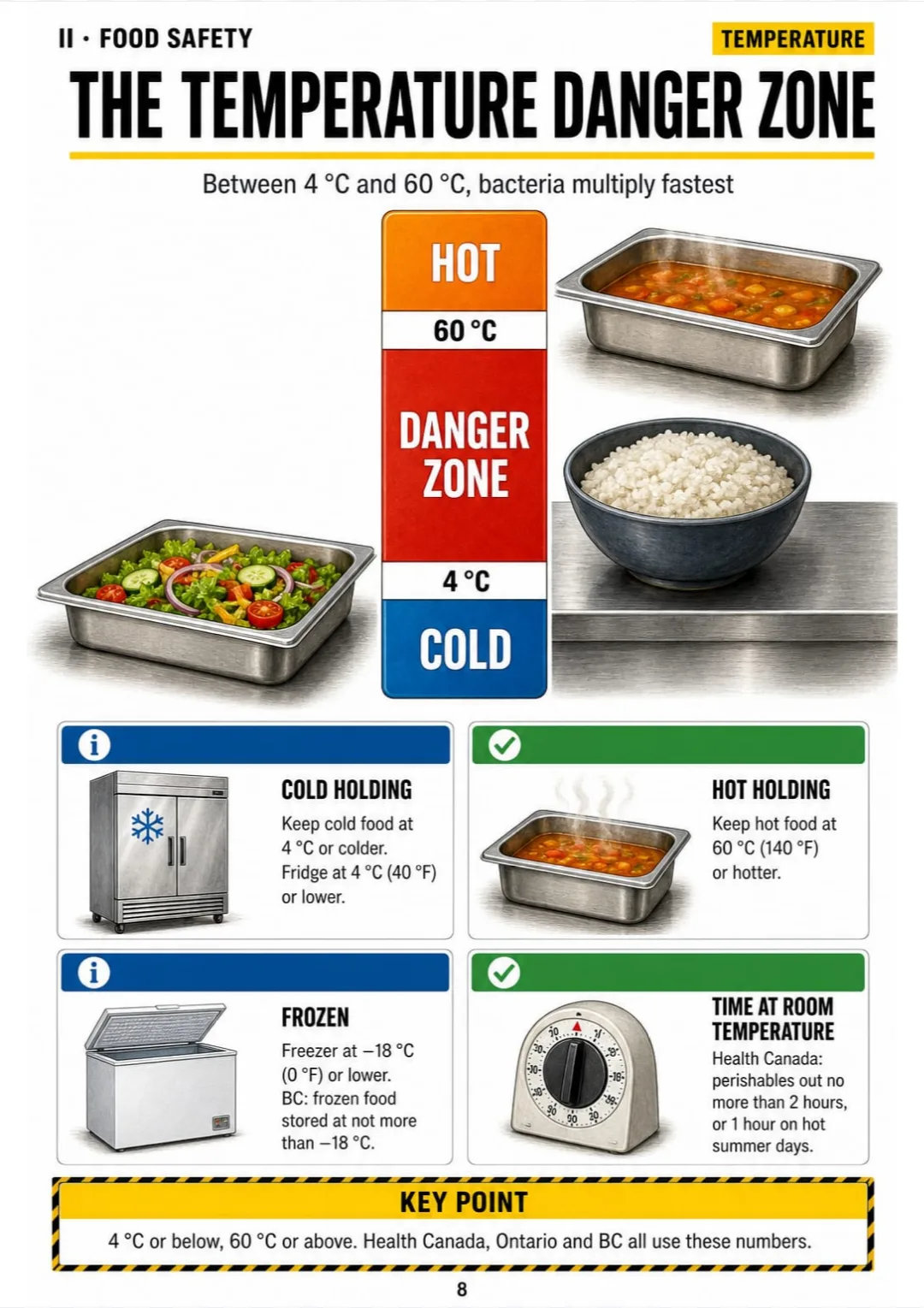
Danger zone 4 °C to 60 °C · cold ≤ 4 °C · hot ≥ 60 °C · frozen ≤ −18 °C
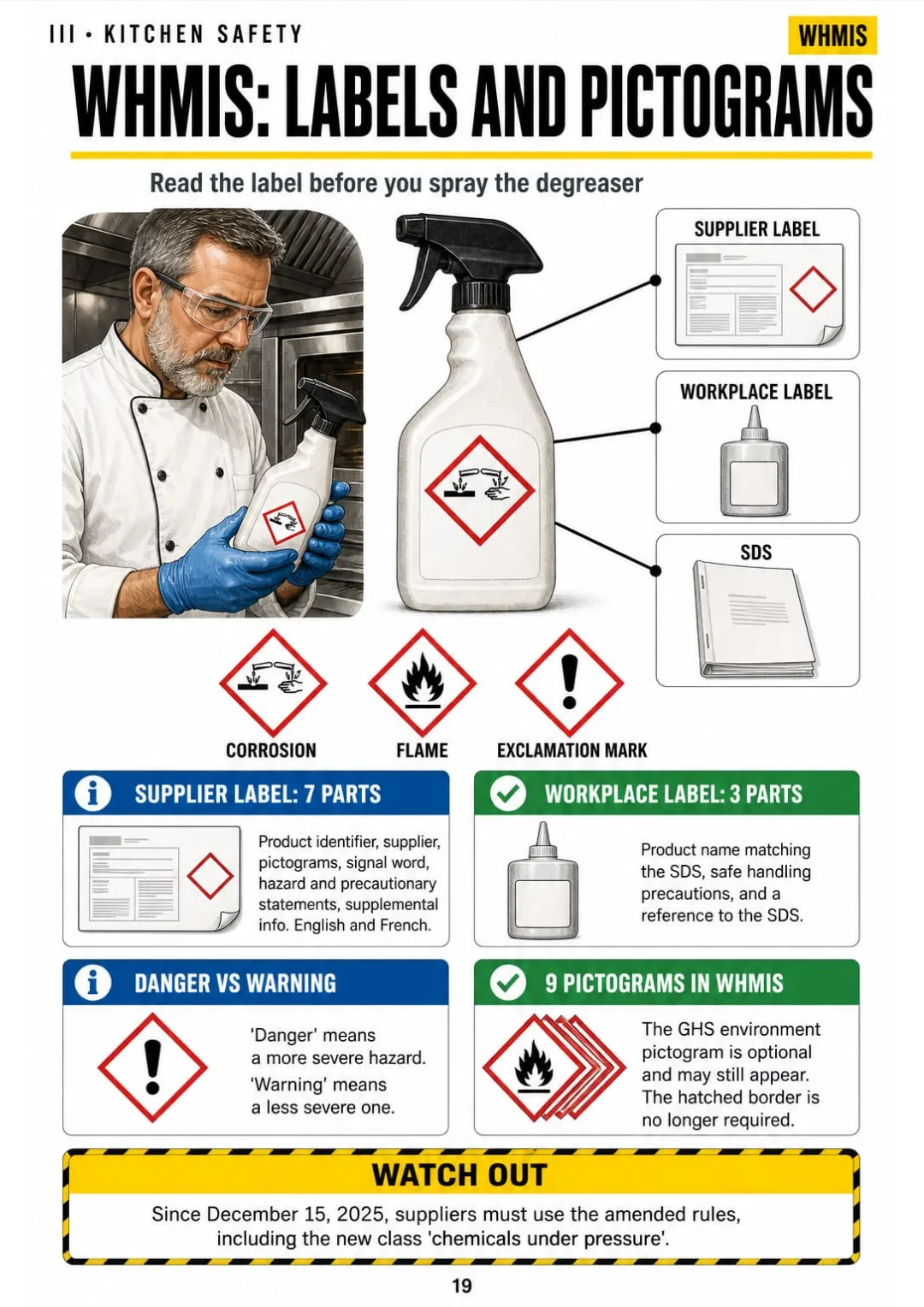
Supplier label, workplace label and SDS, plus corrosion, flame and exclamation mark.
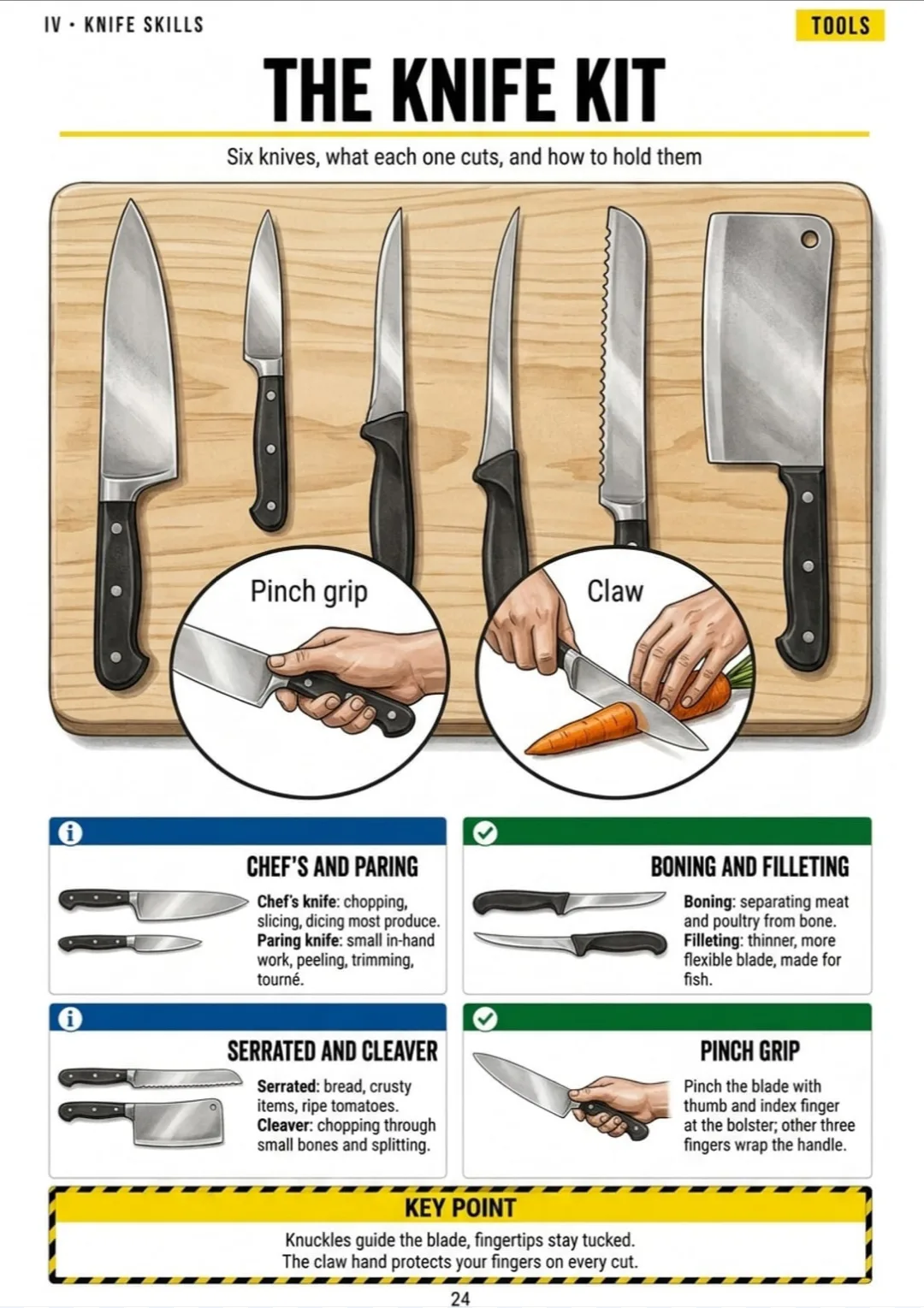
Chef's, paring, boning, filleting, serrated, cleaver: what each cuts, plus pinch grip and claw.
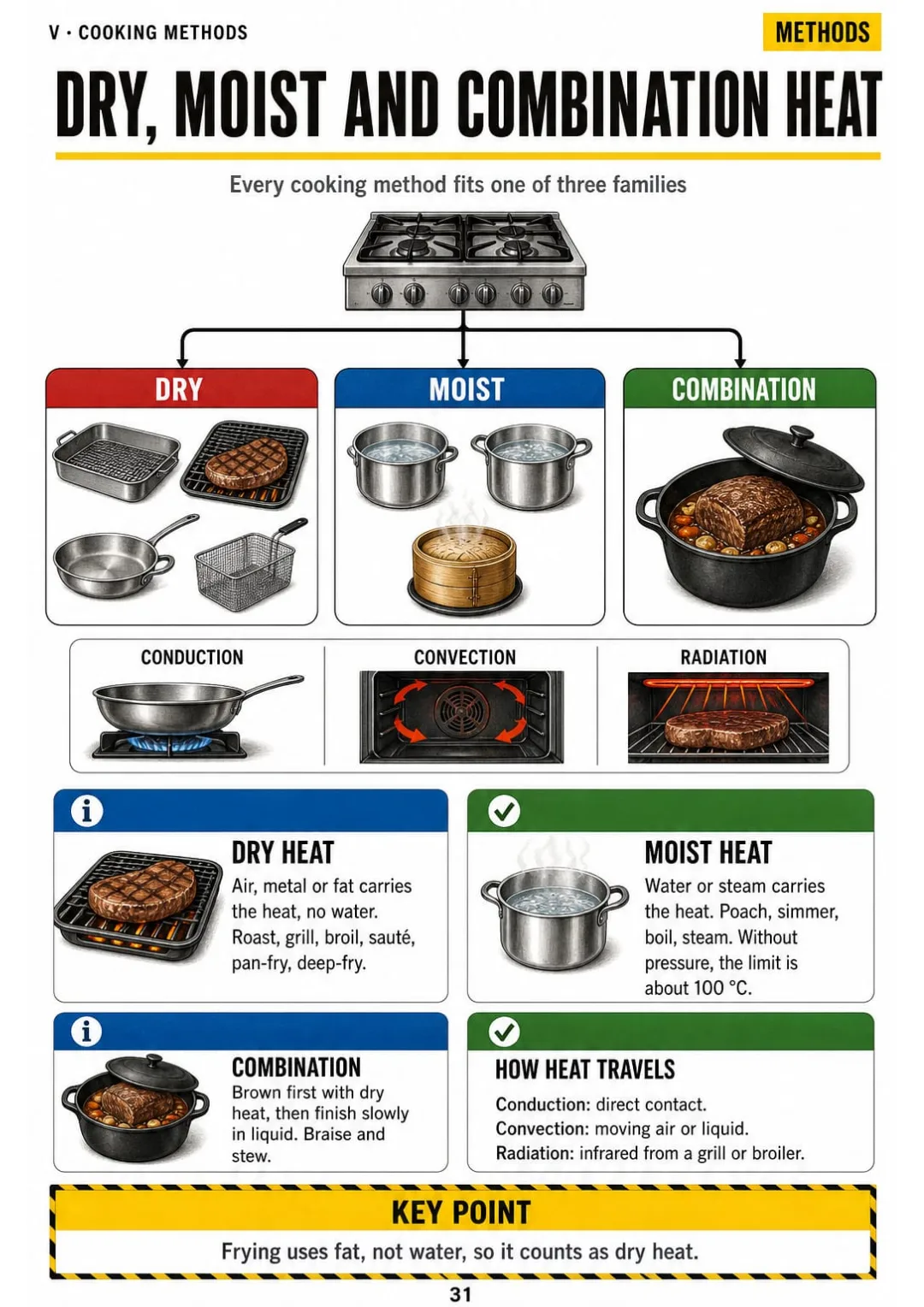
Dry, moist or combination: three families, three ways heat travels
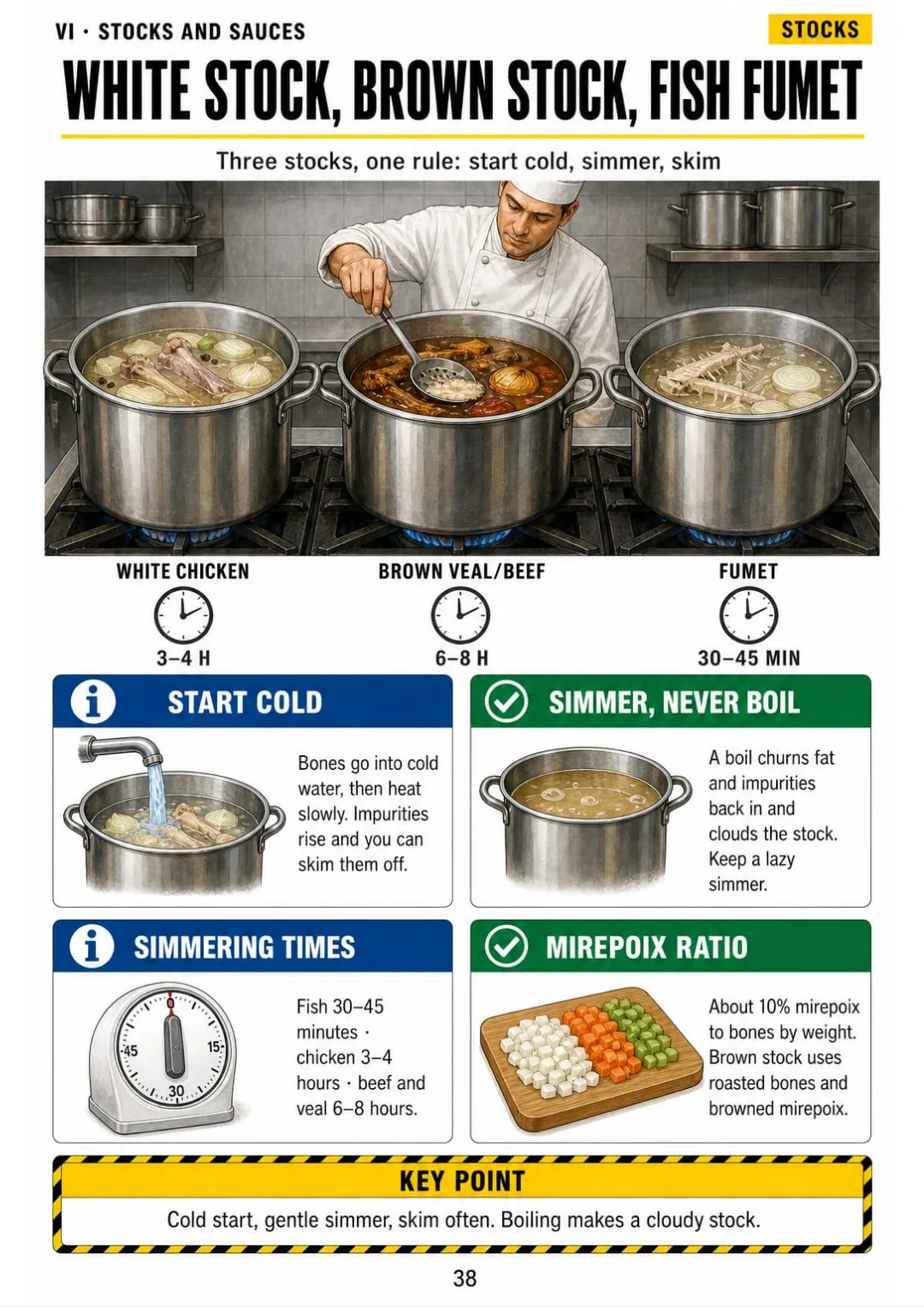
Fish 30–45 min · chicken 3–4 h · beef and veal 6–8 h · about 10% mirepoix
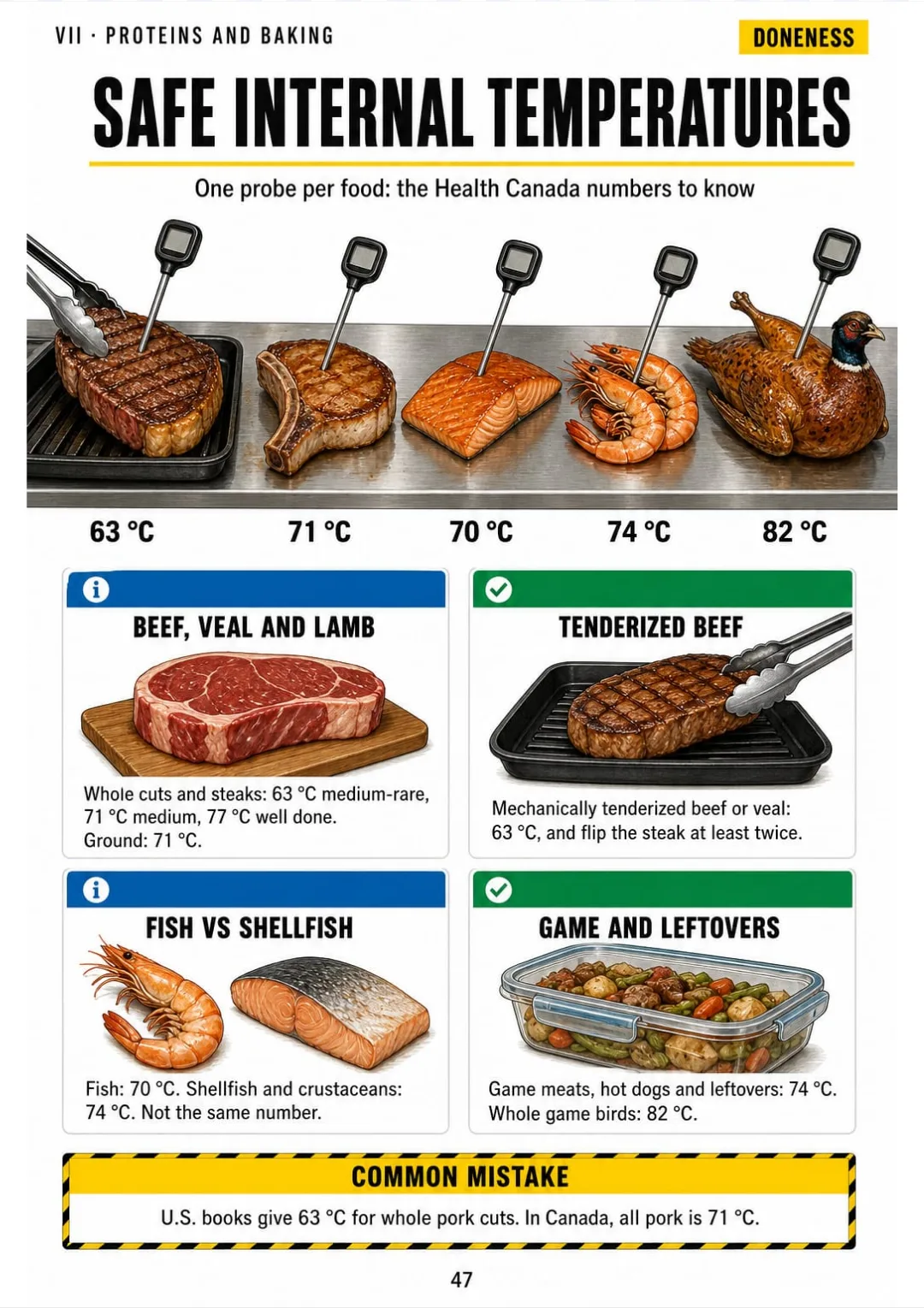
Whole bird 82 °C · poultry pieces 74 °C · pork and ground beef 71 °C · fish 70 °C
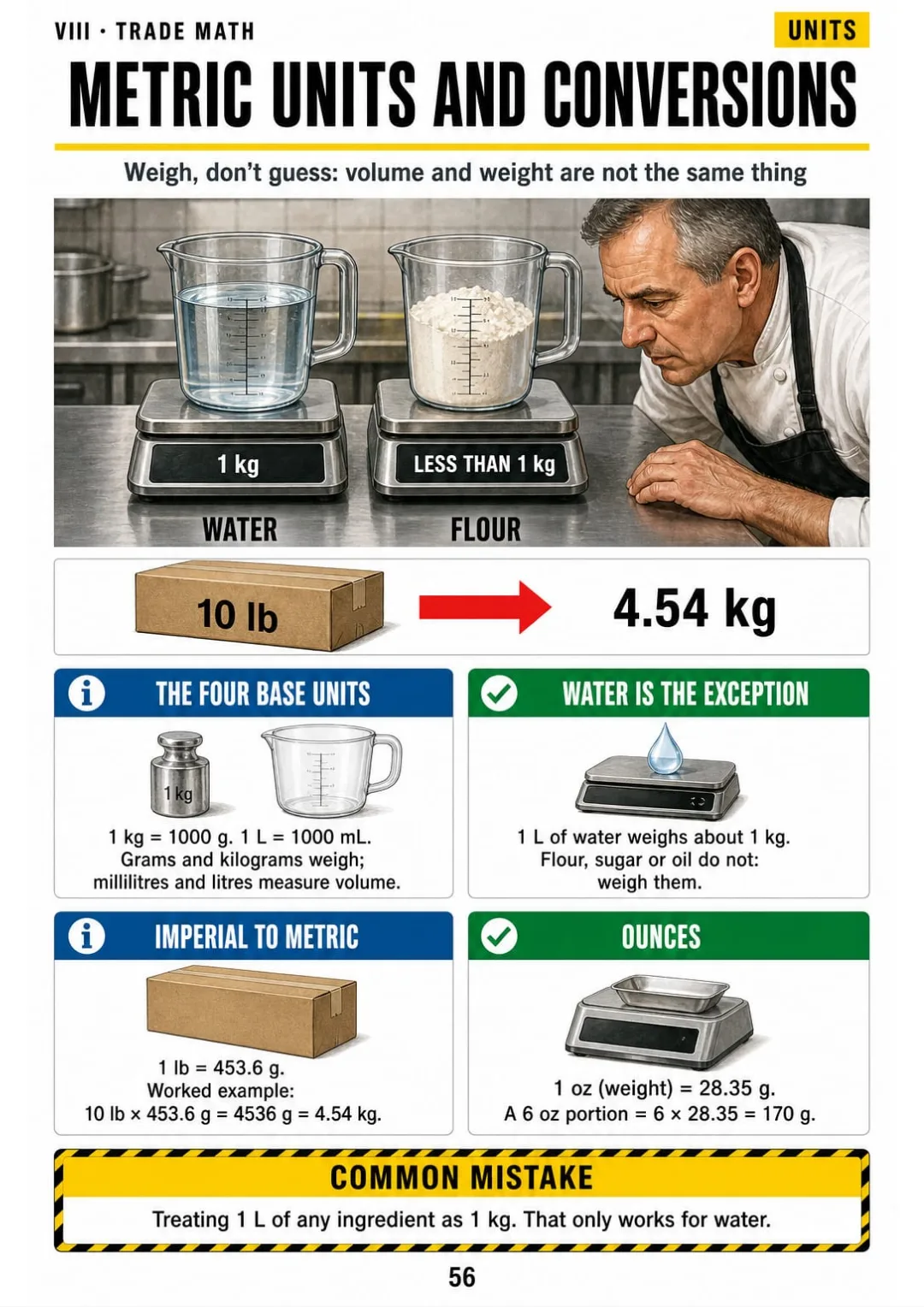
1 L of water = 1 kg · 10 lb = 4.54 kg · 1 oz = 28.35 g

Swipe to see more →

These are real pages from the book. The table of contents is the full one: 9 parts and 62 topics.

The Problem Isn't You. It's How It Was Explained.

You're closing the kitchen and you've just poured degreaser into a spray bottle. Your chef asks what has to go on that bottle before anyone uses it.

You've handled these chemicals for years. But the manual covers WHMIS in paragraphs: supplier label, workplace label, safety data sheet, pictograms, all in the same grey text. On paper, it all runs together.

Supplier label, workplace label and SDS, plus corrosion, flame and exclamation mark.

In the book, WHMIS is one page. The supplier label and the workplace label are drawn side by side, the SDS right next to them, and the corrosion, flame and exclamation mark pictograms each shown with what they mean.

The danger zone, cooling in two stages, the knife kit, the mother sauces and recipe conversion work the same way: each one has its own page.

You see the label, you know what goes on the bottle, and you answer without going back to the manual.

COMPARE FOR YOURSELF

The Same Topic, Two Ways to Study It

THIS
  • The textbook: line after line
  • Temperatures and times explained only in words
  • You walk into the exam unsure
The temperature danger zone refers to the range of temperatures within which pathogenic microorganisms are capable of multiplying at an accelerated rate. Potentially hazardous foods should therefore be maintained at or below 4 °C, or at or above 60 °C, at all times, except during the periods required for preparation, cooking or cooling. Frozen foods should be stored at −18 °C or lower. The cumulative time a food remains within this range should be minimized, as bacterial populations may double in a short interval under favourable conditions.
FOR THIS
  • The danger zone in one drawing
  • The numbers in a box: 4 °C, 60 °C, −18 °C
  • You see it and you get it
Danger zone 4 °C to 60 °C · cold ≤ 4 °C · hot ≥ 60 °C · frozen ≤ −18 °C
CONTENTS

Take a Look at the 9 Parts and 62 Topics

The exam, food safety, kitchen safety, knife skills, cooking methods, stocks and sauces, proteins and baking, trade math and a final review: 66 pages, all illustrated

IThe Exam and How to Use This Book · pp. 5-7
  1. What the Cook Exam Covers
  2. Reading a Multiple-Choice Question
  3. How Every Page Works
IIFood Safety and Sanitation · pp. 8-18
  1. The Temperature Danger Zone: 4 °C to 60 °C
  2. Cooling Cooked Food in Two Stages
  3. Reheating and Hot Holding
  4. Calibrating a Probe Thermometer
  5. Biological, Chemical and Physical Hazards
  6. Cross-Contamination and Fridge Storage Order
  7. Handwashing and Personal Hygiene
  8. Cleaning vs Sanitizing
  9. Receiving and FIFO
  10. The 11 Priority Allergens in Canada
  11. HACCP in 7 Principles
IIIKitchen Safety and Equipment · pp. 19-23
  1. WHMIS 2015: Labels and Pictograms
  2. Kitchen Fires and Extinguisher Classes
  3. Lifting, Burns and Slips
  4. Knife Safety and Maintenance
  5. Commercial Equipment at a Glance
IVKnife Skills and Cuts · pp. 24-30
  1. The Knife Kit
  2. Julienne and Allumette
  3. Batonnet and Pont-Neuf
  4. The Dice Family in Millimetres
  5. Paysanne, Chiffonade and Rondelle
  6. Tourné, Mince and Concassé
  7. Mirepoix and Its Variations
VCooking Methods · pp. 31-37
  1. Dry Heat, Moist Heat and Combination
  2. Poach, Simmer and Boil by Temperature
  3. Steaming and Blanching
  4. Sauté, Pan-Fry and Stir-Fry
  5. Deep-Frying
  6. Roasting, Carryover Cooking and Resting
  7. Braising and Stewing
VIStocks, Soups and Sauces · pp. 38-46
  1. White Stock, Brown Stock, Fish Fumet
  2. Thickeners: Roux, Slurry, Liaison
  3. Béchamel
  4. Velouté
  5. Espagnole and Demi-Glace
  6. Tomato Sauce
  7. Hollandaise and Its Family
  8. The Mother Sauce Map
  9. Soups: Clear, Thick and Specialty
VIIProteins, Produce and Baking · pp. 47-55
  1. Safe Internal Temperatures
  2. Beef Primal Cuts
  3. Pork, Lamb and Veal Primals
  4. Poultry: Fabrication and Doneness
  5. Fish and Shellfish
  6. Eggs and Breakfast Cookery
  7. Vegetables, Potatoes and Grains
  8. Baking Basics: Ingredient Functions
  9. Doughs, Batters and Pastry
VIIITrade Math and Kitchen Management · pp. 56-61
  1. Metric Units and Conversions
  2. Recipe Conversion Factor
  3. Yield Percentage
  4. Baker's Percentage
  5. Portion Control and Food Cost
  6. Menu Types and Ordering
IXReview and Exam Prep · pp. 62-66
  1. All the Temperatures on One Page
  2. All the Cuts on One Page
  3. Questions Asked Most Often, by Topic
  4. The Most Common Mistakes on Paper
  5. Your Last-Week Plan

One Page, One Topic, All Clear

Think of it this way:

It's the night before the exam, after a ten-hour shift. You need the cooling rule clear in your head: how far the food has to drop, and in what two stages.

You open the page on cooling and see the two stages drawn as a line going from hot to cold, with the temperature and the hours marked on each step.

Dry, moist or combination: three families, three ways heat travels

Same with the danger zone, the dice family in millimetres, the five mother sauces, safe internal temperatures and the recipe conversion factor: each one on its own page.

Cook Trade Exam Illustrated is 9 parts and 62 topics, all drawn, and at the end a review section: all the temperatures on one page, all the cuts on another, and your last-week plan.

What you see drawn, you don't have to memorize.

What's Inside Cook Trade Exam Illustrated:

Ipp. 5-7

The Exam and How to Use This Book

What the cook exam covers, how to read a multiple-choice question and how every page in the book works.

IIpp. 8-18

Food Safety and Sanitation

The danger zone, two-stage cooling, reheating and hot holding, thermometer calibration, hazards, fridge storage order, handwashing, cleaning vs sanitizing, receiving and FIFO, the 11 priority allergens and HACCP.

IIIpp. 19-23

Kitchen Safety and Equipment

WHMIS 2015 labels and pictograms, fires and extinguisher classes, lifting, burns and slips, knife safety and commercial equipment.

IVpp. 24-30

Knife Skills and Cuts

The knife kit, julienne, batonnet, the dice family in millimetres, paysanne, chiffonade, tourné, concassé and mirepoix.

Vpp. 31-37

Cooking Methods

Dry, moist and combination heat, poaching to boiling by temperature, steaming, sautéing, deep-frying, roasting with carryover, braising and stewing.

VIpp. 38-46

Stocks, Soups and Sauces

White and brown stock, fish fumet, roux and other thickeners, the five mother sauces one by one, the mother sauce map and soups.

VIIpp. 47-55

Proteins, Produce and Baking

Safe internal temperatures, beef, pork, lamb and veal primals, poultry, fish and shellfish, eggs, vegetables and grains, and baking basics.

VIIIpp. 56-61

Trade Math and Kitchen Management

Metric units and conversions, the recipe conversion factor, yield percentage, baker's percentage, portion control and menu types.

IXpp. 62-66

Review and Exam Prep

All the temperatures on one page, all the cuts on one page, the questions asked most often, the most common mistakes on paper and a last-week plan.

At the end of the book: All the temperatures and all the cuts on one page each, plus a last-week plan.
Plus: 2 Free Books

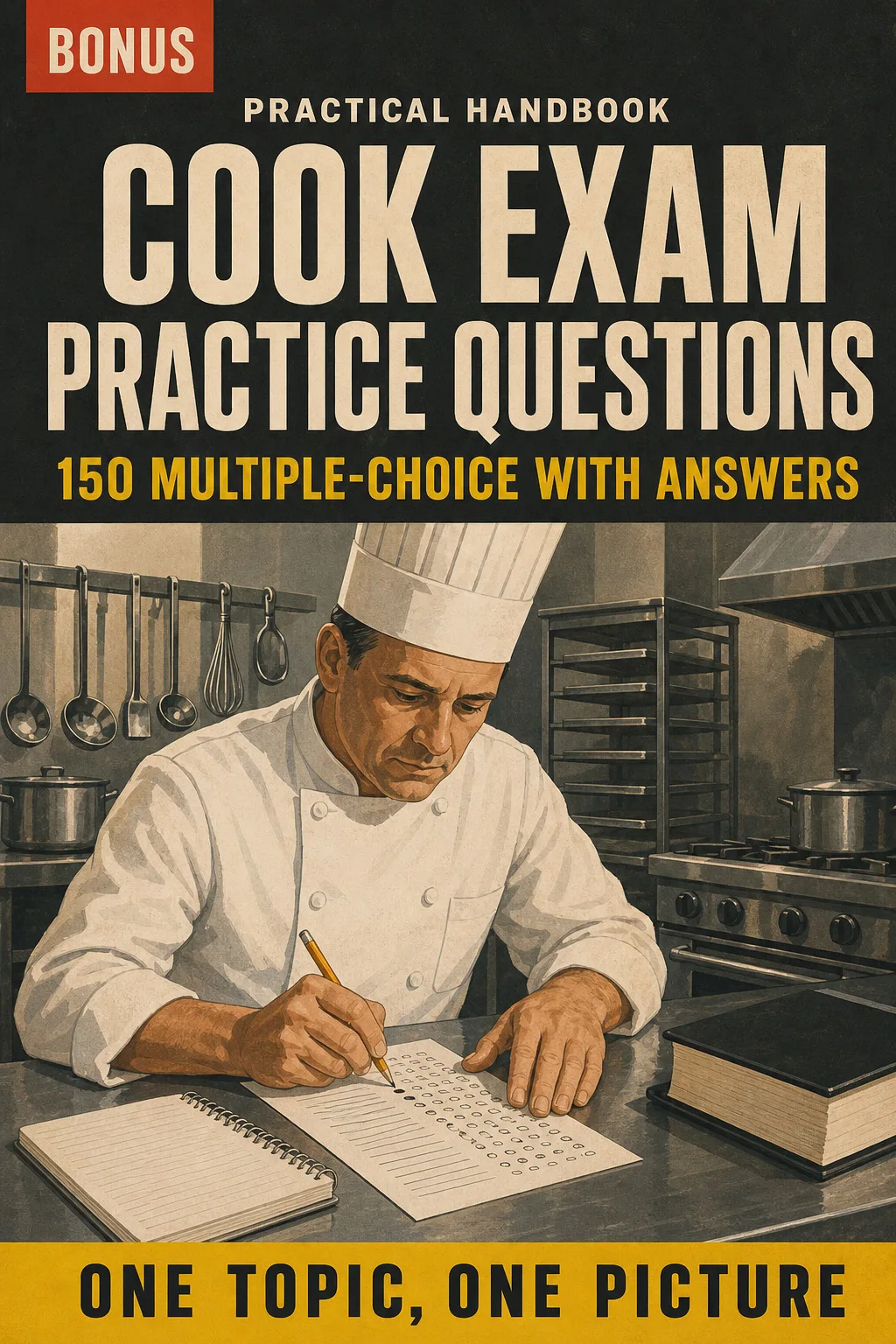
Cook Exam Practice Questions: 150 Multiple-Choice with Answers

BONUS 1: «Cook Exam Practice Questions: 150 Multiple-Choice with Answers»

Value on its own: US$ 17.90

Practise in the same multiple-choice format as the exam, with every answer explained in one line, so the wording doesn't catch you off guard on the day.

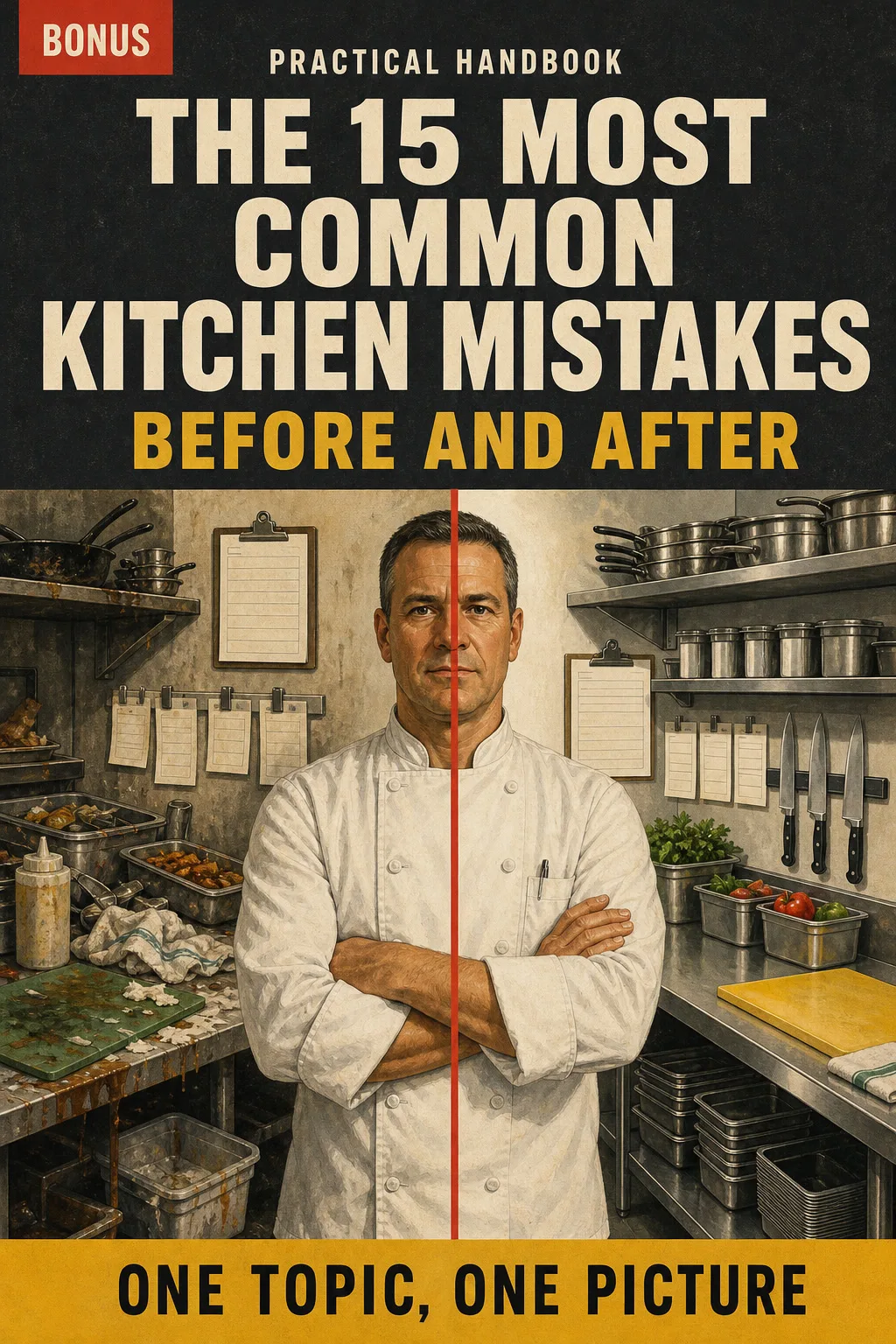
The 15 Most Common Kitchen Mistakes: Before and After

BONUS 2: «The 15 Most Common Kitchen Mistakes: Before and After»

Value on its own: US$ 14.90

See the 15 most common mistakes cooks make on the line and on paper, drawn side by side with the right way, for a quick review the night before.

Cook Trade Exam Illustrated with 2 Free Books

  • Cook Trade Exam Illustrated: 66 illustrated pagesUS$ 63
  • BONUS 1: Cook Exam Practice Questions: 150 Multiple-Choice with AnswersUS$ 17.90
  • BONUS 2: The 15 Most Common Kitchen Mistakes: Before and AfterUS$ 14.90
  • High-resolution PDF to printIncluded
Total value US$ 95.80
YOUR PRICE:
US$ 27
You save US$ 68.80
YES, I WANT COOK TRADE EXAM ILLUSTRATED FOR US$ 27

📄 This is a digital PDF book sent to your email: nothing is printed or shipped.

Secure purchaseEncrypted payment30-day guarantee

PDF by email: We email you Cook Trade Exam Illustrated as a PDF, together with the two free books. It's a single payment: no installments, no extra charges.

Who This Book Is For

You're finishing your apprenticeship

You're finishing your apprenticeship

Each topic from your training on its own page, so you can review between shifts instead of sitting down for hours with the textbook.

Your exam date is booked

Your exam date is booked

The numbers the exam asks for, from 4 °C to 82 °C and from 3 mm to the conversion factor, boxed on every page and easy to go over in the last week.

You've cooked for years without the certificate

You've cooked for years without the certificate

What you already do on the line, put in order and in metric, so you can turn years of experience into answers on paper.

Everything You Get Today

US$ 95.80US$ 27
YES, I WANT COOK TRADE EXAM ILLUSTRATED FOR US$ 27

📄 This is a digital PDF book sent to your email: nothing is printed or shipped.

30DAYS
GUARANTEE

30-Day Guarantee

Try Cook Trade Exam Illustrated for 30 days, bonus books included.

We refund everything if the file won't open, if the book isn't what you see here, if you were charged twice or if the email doesn't arrive. Just email us.

You pay once. No subscriptions.

Frequently Asked Questions

Is it for me if I've cooked for years but never wrote the exam?

Yes. The book doesn't teach you to boil water: it puts what you already do on the line in order, with the exact numbers, cuts and metric math the cook trade exam asks about.

Where does the content come from?

It's written for Canada: everything in °C, grams and litres, no Fahrenheit or ounce-only recipes. It's checked against the Red Seal Occupational Standard for Cook, Health Canada's safe internal cooking temperatures, the CFIA list of priority allergens, WHMIS 2015 and current provincial food premises rules. The exam is interprovincial; local rules can vary, so always confirm the details for your province.

Is it official material?

No. It's independent study material. It isn't affiliated with or endorsed by the Red Seal Program, Health Canada or any provincial apprenticeship authority.

Does it replace my apprenticeship or training?

No. It's a study aid to review alongside your training, your hours in the kitchen and your province's rules. It doesn't give you a certificate, count toward your apprenticeship hours or replace professional advice: the certificate comes from passing the exam through your province.

Are the practice questions the ones on the exam?

No. The 150 multiple-choice questions are written for this book to practise the format. They are not real exam questions.

When and how does it arrive?

The book and the 2 bonus books arrive as PDFs by email, to the address you enter at checkout.

Do I have to pay every month?

No. It's a one-time payment. No subscription.

Can I have it on paper?

Yes. It's a PDF you can print at home or at a print shop, whole or just the pages you want to keep at your station.

How does the refund work?

You have 30 days. We refund everything if the file won't open, if the book isn't what you see on this page, if you were charged twice or if the email doesn't arrive: just email us.

Before You Close This Page

No more rereading without anything sticking.

The danger zone, the cuts and the internal temperatures: you see them drawn, and that's it.

You walk into the exam knowing where everything is.

Drawings make studying faster.

The book is right below.

One-time payment: US$ 27 · Guarantee: 30 days · PDF by email

YES, I WANT COOK TRADE EXAM ILLUSTRATED FOR US$ 27

📄 This is a digital PDF book sent to your email: nothing is printed or shipped.